
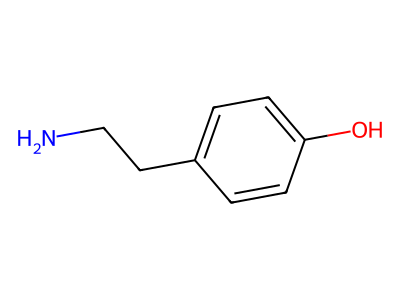
Tyramine
Also known as: 2-(4-Hydroxyphenyl)ethylamine, 4-(2-Aminoethyl)-phenol (thyramin), 4-(2-aminoethyl)-pheno, 4-(2-aminoethyl)phenol, 4-(Ethylamino)benzolol, 4-(Ethylamino)phenol, 4-Ethylaminophenol, 4-Hydroxy-beta-phenylethylamine, 4-Hydroxyphenethylamine, 4-hydroxy-benzeneethanamin, 4-hydroxy-phenethylamine, AKOS NCG-0021, EINECS 200-115-8, L-TYRAMINE, MFCD00008193, Phenol, 4-(ethylamino)-, Systogene, TYRAMINE, TYROSAMINE, Tocosine
Tyramine (CAS 51-67-2) is a compound in the Organic Bases category listed in the Jingsj chemical database. It has the molecular formula C8H11NO and a molecular weight of 137.179 g/mol. Key properties include a melting point of 160-162 °C(lit.), a boiling point of 275.1±23.0 °C at 760 mmHg, a density of 1.1±0.1 g/cm3 and a flash point of 141.3±13.3 °C. It is classified under GHS with signal word Warning and hazard statements H315 — Causes skin irritation, H319 — Causes serious eye irritation and H335 — May cause respiratory irritation. No supplier offers are currently listed; request a quote. Record last updated Aug 21, 2026.
- CAS No.
- 51-67-2
- Jingsj CID
- J-1956195-6
- Molecular Formula
- C8H11NO
- Molecular Weight
- 137.179 g/mol
- Category
- Organic Bases
- Last updated
- 8/21/2026
No offers for this compound yet.
Request a quotePhysicochemical Properties
| Melting Point | 160-162 °C(lit.) |
|---|---|
| Boiling Point | 275.1±23.0 °C at 760 mmHg |
| Density | 1.1±0.1 g/cm3 |
| Flash Point | 141.3±13.3 °C |
| Exact Mass | 137.084061 |
| PSA | 46.25000 |
| LogP | 1.38 |
| Vapor Pressure | 0.0±0.6 mmHg at 25°C |
| Refractive Index | 1.600 |
| Additional Property | 1g/95mL (15 ºC) |
GHS Safety & Compliance
- H315 — Causes skin irritation
- H319 — Causes serious eye irritation
- H335 — May cause respiratory irritation
Activity & Biological Data
| Target | Human Endogenous Metabolite |
|---|---|
| Additional Information | [1]. Harrison WM, et al. The tyramine challenge test as a marker for melancholia. Arch Gen Psychiatry. 1984 Jul;41(7):681-5. [2]. BURN JH, et al. The action of sympathomimetic amines in animals treated with reserpine. J Physiol. 1958 Dec 4;144(2):314-36. [3]. Juorio AV, et al. A possible role for tyramines in brain function and some mental disorders. Gen Pharmacol. 1982;13(3):181-3. |
Customs & Trade Information
| HS Code | 2922299090 |
|---|---|
| Summary | 2922299090. other amino-naphthols and other amino-phenols, other than those containing more than one kind of oxygen function, their ethers and esters; salts thereof. VAT:17.0%. Tax rebate rate:13.0%. . MFN tariff:6.5%. General tariff:30.0% |
Frequently Asked Questions
What is the CAS number of Tyramine?
The CAS number of Tyramine is 51-67-2.
What are the molecular formula and molecular weight of Tyramine?
Tyramine has molecular formula C8H11NO and molecular weight 137.179 g/mol.
Is Tyramine hazardous?
Tyramine has GHS signal word Warning and hazard statements H315 — Causes skin irritation; H319 — Causes serious eye irritation; H335 — May cause respiratory irritation.
What are the upstream and downstream products of Tyramine?
For Tyramine, Upstream Products: L-Tyrosine, N,N'-Disuccinimidyl carbonate, 4-Hydroxyphenylacetonitrile; Downstream Products: N-(p-Hydroxyphenethyl)-N-(3-hydroxy-4-methoxy)benzylamine, 1,2,3,4-Tetrahydroisoquinolin-7-ol, N-Acetyltyramine.
Data compiled from public chemical databases such as PubChem and supplier catalogs; supplier offers are provided by suppliers.
Last updated:
How to cite: Jingsj. "Tyramine (CAS 51-67-2)". Jingsj Chemical Database. https://www.jingsj.com/compound/J-1956195-6 (accessed 2026-11-06).
Data for reference only; verify product details with suppliers before purchase.