
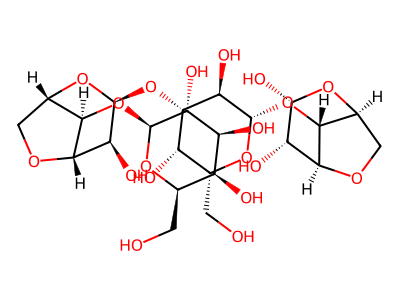
Agarose
琼脂糖
Also known as: Agarose gel, Agarose, low melting, Agarose, high gel strength, Agarose, medium EEO, Agarose, molecular biology grade, Agarose, ultra, Agarose for electrophoresis, Agarose 6B for chromatography, Agarose ME
Agarose (CAS 9012-36-6) is a compound in the Organic Compounds category listed in the Jingsj chemical database. It has the molecular formula C24H38O19 and a molecular weight of 630.547 g/mol. It is also known as Agarose gel, Agarose, low melting and Agarose, high gel strength. Key properties include a melting point of ≤90 °C (4% in water)(lit.), a boiling point of 993.9±65.0 °C at 760 mmHg, a density of 1.8±0.1 g/cm3 and a flash point of 554.9±34.3 °C. It is classified under GHS with signal word Warning and hazard statements H226 — Flammable liquid and vapour. No supplier offers are currently listed; request a quote. Record last updated Aug 21, 2026.
- CAS No.
- 9012-36-6
- Jingsj CID
- J-26536-2
- Molecular Formula
- C24H38O19
- Chinese Name
- 琼脂糖
- Molecular Weight
- 630.547 g/mol
- Category
- Organic Compounds
- Last updated
- 8/21/2026
No offers for this compound yet.
Request a quotePhysicochemical Properties
| Melting Point | ≤90 °C (4% in water)(lit.) |
|---|---|
| Boiling Point | 993.9±65.0 °C at 760 mmHg |
| Density | 1.8±0.1 g/cm3 |
| Flash Point | 554.9±34.3 °C |
| Exact Mass | 630.200745 |
| PSA | 285.37000 |
| LogP | -2.85 |
| Appearance | suspension (75% in water) | White to slightly cream |
| Vapor Pressure | 0.0±0.6 mmHg at 25°C |
| Refractive Index | 1.679 |
| Stability | Analysis Note The following is a list of properties associated with our agaroses: Sulfate content - used as an indicator of purity, since sulfate is the major ionic group present. Gel strength - the force that must be applied to a gel to cause it to fracture. Gel point - the temperature at which an aqueous agarose solution forms a gel as it cools. Agarose solutions exhibit hysteresis in the liquid-to-gel transition - that is, their gel point is not the same as their melting temperature. Electroendosmosis (EEO) - a movement of liquid through the gel. Anionic groups in an agarose gel are affixed to the matrix and cannot move, but dissociable counter cations can migrate toward the cathode in the matrix, giving rise to EEO. Since electrophoretic movement of biopolymers is usually toward the anode, EEO can disrupt separations because of internal convection. Application Routine use agarose is ideal for everyday analysis of nucleic acids by gel electrophoresis or blotting (Northern or Southern) and is also suitable for protein applications such as Ouchterlony and radial immunodiffusion (RID). Has low ethidium bromide and SYBR Green background staining. |
| Additional Property | H2O: 20 mg/mL hot, slightly hazy, very faintly yellow | Soluble in water. |
GHS Safety & Compliance
- H226 — Flammable liquid and vapour
Frequently Asked Questions
What is the CAS number of Agarose?
The CAS number of Agarose is 9012-36-6.
What are the molecular formula and molecular weight of Agarose?
Agarose has molecular formula C24H38O19 and molecular weight 630.547 g/mol.
Is Agarose hazardous?
Agarose has GHS signal word Warning and hazard statements H226 — Flammable liquid and vapour.
Data compiled from public chemical databases and supplier catalogs; supplier offers are provided by suppliers.
Last updated:
How to cite: Jingsj. "Agarose (CAS 9012-36-6)". Jingsj Chemical Database. https://www.jingsj.com/compound/J-26536-2 (accessed 2026-10-28).
Data for reference only; verify specifications, grades and regulatory status with suppliers before purchase.